
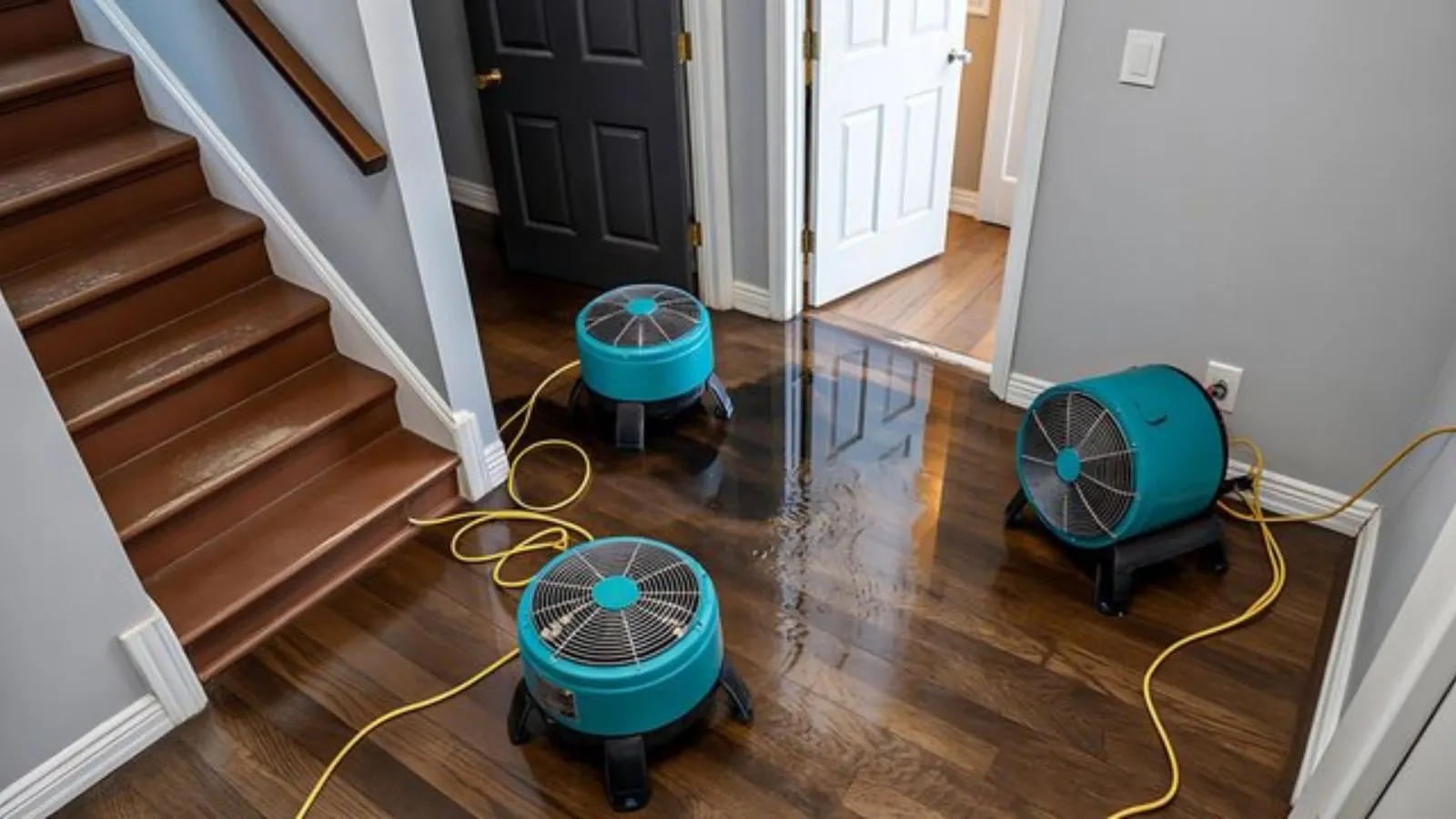
Active water damage in your Johnstown home?
The dispatch line is answered 24 hours a day, every day of the year.
What water damage restoration actually involves
Water damage restoration is the work of stopping the damage after a leak, flood or storm. It means removing water, drying wet structure and contents, cleaning or removing what cannot be saved and rebuilding to the condition before the loss. In Johnstown, PA the 24/7 emergency line sends a crew to start that work as soon as it can, and the first call decides how much of the house is saved.
The reason speed matters is simple. Drywall, subfloor and insulation start to swell and stain within hours of getting wet, and a house that stays damp for several days can grow mold. ANSI/IICRC S500 is the published reference the trade uses for water damage restoration, and you can ask any company whether its crews work to it. This site does not claim any certification.
Where the water came from decides the plan
Nineteen service pages cover the common sources of water damage in Johnstown homes and businesses. Start with the one that matches what you see, or call and the dispatcher will point you to the right plan. The full list is on the water damage services page.
Pipes and plumbing
A burst pipe sends supply pressure into a wall, while a frozen pipe cracks and floods when it thaws. Tank failures and under-floor lines have their own pages: water heater leaks and slab leaks.
Appliances and HVAC
Appliance leaks come from supply hoses and drain lines, AC leaks from clogged condensate drains, and kitchen water damage from the sink area and cabinets.
Weather and building envelope
Rising water goes to flood damage cleanup, wind and rain through the envelope to storm water damage, and the lowest rooms to basement and crawl space work. A wet ceiling has its own page: ceiling water damage repair.
Water removal and drying
Water extraction removes standing water. Structural drying brings wet framing down to a measured target, and sewage backup cleanup handles contaminated water safely.
Floors and walls
Hardwood floors, carpet and pad and walls and drywall each react differently to water, so each gets its own plan.
Commercial
Stores, offices and multi-unit buildings need a plan that limits downtime. See commercial water damage restoration for how that works.
What to expect when you call
24/7 emergency line
The dispatch line is answered every day of the year, including nights, weekends and holidays.
Scope and price explained first
You hear what the job involves and what drives the price before any work begins.
Drying you can measure
Moisture meters and thermal imaging show where the water went and when a material is actually dry.
Paperwork for your claim
Photos, readings and a written scope give your insurer the record it will ask for.
How a water damage job moves from call to rebuild
Call and describe the damage
Tell the dispatcher where the water is coming from, how far it has spread and whether the source is stopped. If it is safe, shut off the main water valve first.
Assess and document
A technician checks moisture levels with meters and a thermal camera, photographs the damage and writes down a scope of work before equipment goes in.
Extract and dry
Extraction units pull standing water, then air movers and LGR dehumidifiers dry the structure. Readings are logged each visit until the framing reaches its dry standard.
Repair and rebuild
Once everything is dry, damaged drywall, flooring and trim are replaced. The rebuild scope is explained before it starts.
Every step is written down. If your insurer asks what was wet, how wet it was and what was done about it, the readings and photos answer that. For a closer look at the drying phase, read about structural drying and dehumidification.
Water damage cost and insurance in plain terms
No honest company can quote a repair price over the phone without seeing the damage. What we can do is explain what moves the number, so the estimate you receive makes sense. Scope and price are explained before work starts, and the written scope comes first so there are no surprises later.
| What changes the price | Why it matters |
|---|---|
| Water category | Clean supply water costs less to handle than Category 2 or Category 3 water, which needs removal of porous materials and extra safety steps. |
| Affected square footage | More wet area means more equipment, more labor and more drying days. |
| Materials involved | Drywall, carpet pad and insulation are usually replaced, while solid wood and plaster can often be dried in place. |
| Drying days and equipment | Dense materials and cool, damp rooms dry slowly, so equipment stays longer. |
| Rebuild scope | Repairs after drying are priced separately from the emergency work. |
Want your real number? Call (814) 358-8169 and describe the damage. A technician will tell you what the job is likely to involve.
Insurance, in general terms
Sudden and accidental water damage, like a pipe that bursts overnight, is often covered by a homeowners policy. Slow leaks and neglected maintenance often are not, and flood damage is usually excluded and needs a separate flood policy. Read your policy or ask your insurer, because wording varies.
The Pennsylvania Insurance Department advises taking photos or video before cleaning up, keeping every receipt and not making permanent repairs until your insurer approves them. Writing down the name, title and date of each person you speak with at the insurance company also helps.
Why Johnstown houses get wet, and what it means for you
Johnstown sits where the Stonycreek and Little Conemaugh rivers join to form the Conemaugh, which is why the city's flood history is so well known.
On May 31, 1889, the South Fork Dam failed and 2,209 people died, with debris piling against the Stone Bridge. The lesson for a homeowner today is not history trivia. It is that low ground near the rivers has flooded before, so a basement in Cambria City, Kernville or Woodvale deserves a hard look after any heavy rain.
After the March 1936 flood, the U.S. Army Corps of Engineers built the Johnstown channel improvements between 1938 and 1943, covering 9.1 miles of the Conemaugh, Stonycreek and Little Conemaugh. In July 1977, about 12 inches of rain fell in 24 hours, six dams failed and the flow topped what the channels were designed for.
Channels reduce risk and do not remove it, so check the FEMA flood map for your address and ask your insurer about flood coverage before you need it.
Day to day, the water problems are smaller. Older homes in Downtown, Minersville, Moxham and Morrellville often have aging supply lines and tired water heaters, and Johnstown's hillside lots send runoff toward foundations. If your sewer line backs up, the Greater Johnstown Water Authority manages the city sanitary sewer system and can be reached at 814-533-4300.
Where we work around Johnstown
We serve every Johnstown ZIP code, including 15901, 15902, 15904, 15905, 15906, 15907, 15909 and 15915. From downtown to the West End and out toward the Cambria County line, the same 24/7 line covers you. Heading out of the city, we also work in nearby towns, and each has its own page covering local conditions: Sidman, Salix, Seward, Nanty Glo and Elton. See the full service area page for the map.
☎ Call (814) 358-8169Neighborhoods We Serve
Inside the city, these historic residential neighborhoods have their own pages.
Frequently asked questions
As quickly as you can reach a phone. Wet drywall and subfloor start to deteriorate within a day or so, and mold can begin growing if materials stay damp for several days. Stop the source if it is safe, then call the 24/7 line.
We offer same-day response when crews are available, but we do not promise a specific arrival time because road conditions, weather and call volume change the answer.
Shut off the main water valve if the source is a pipe or appliance. Turn off power to wet areas only if you can reach the panel while standing on a dry surface, and call 911 or the utility for any electrical or gas concern before calling us.
Lift valuables and small furniture off the floor, keep people and pets out of contaminated water and take photos of everything before you move it.
We document the damage with photos, moisture readings and a written scope of work, which gives your insurer the record it will ask for. We cannot promise a claim will be approved or tell you what a policy covers, so read your policy or ask your insurer.
Flood damage is usually excluded from standard homeowners policies and needs a separate flood policy. Check your policy, and check the FEMA flood map for your address, before the next storm.
It depends on the water category and how long materials stayed wet. Clean water caught quickly often lets us dry carpet and framing in place, while drywall and pad that sat in Category 2 or Category 3 water are usually removed. A moisture meter reading settles it better than guesswork.
Yes. The dispatch line is open 24 hours a day, every day of the year, so a burst pipe at 2 a.m. gets the same answer as one at noon.
We cover 15901, 15902, 15904, 15905, 15906, 15907, 15909 and 15915, plus nearby towns including Sidman, Salix, Seward, Nanty Glo and Elton.
Damage spreading right now?
Call the 24/7 emergency line and describe what you see. Same-day response is offered based on crew availability.
☎ Call (814) 358-8169