
What water does to a wood floor
Hardwood is a natural material that absorbs moisture and swells. Boards on a wet floor cup, meaning the edges rise higher than the middle, or crown, buckle and gap as they dry. Hardwood floor water damage repair is the work of drying the floor, judging what can be saved and replacing or refinishing what cannot.
If a floor is wet, stop the source first. Wipe up standing water, lift rugs and furniture and call us, because a wood floor often does better when drying starts within a day or two.
Signs of a damaged wood or laminate floor
Look for edges that curl upward, boards that lift from the subfloor, gaps between planks, dark stains or a white haze under the finish, a hollow sound underfoot and a musty smell. Laminate swells at the seams and the edges feel rough. Engineered wood can delaminate, with the top layer peeling away.
Dark staining that goes all the way through a board is usually the mark of long-term moisture, and the board generally has to be replaced.
Wood, engineered and laminate after water
Floor type changes the outlook.
| Floor type | Typical result | What helps |
|---|---|---|
| Solid hardwood | Cups, then may flatten as it dries | Fast drying, sometimes with panel drying systems, then sanding |
| Engineered hardwood | Layers can separate | Quick drying, but often replaced if delaminated |
| Laminate | Swells at edges and rarely recovers | Usually replaced |
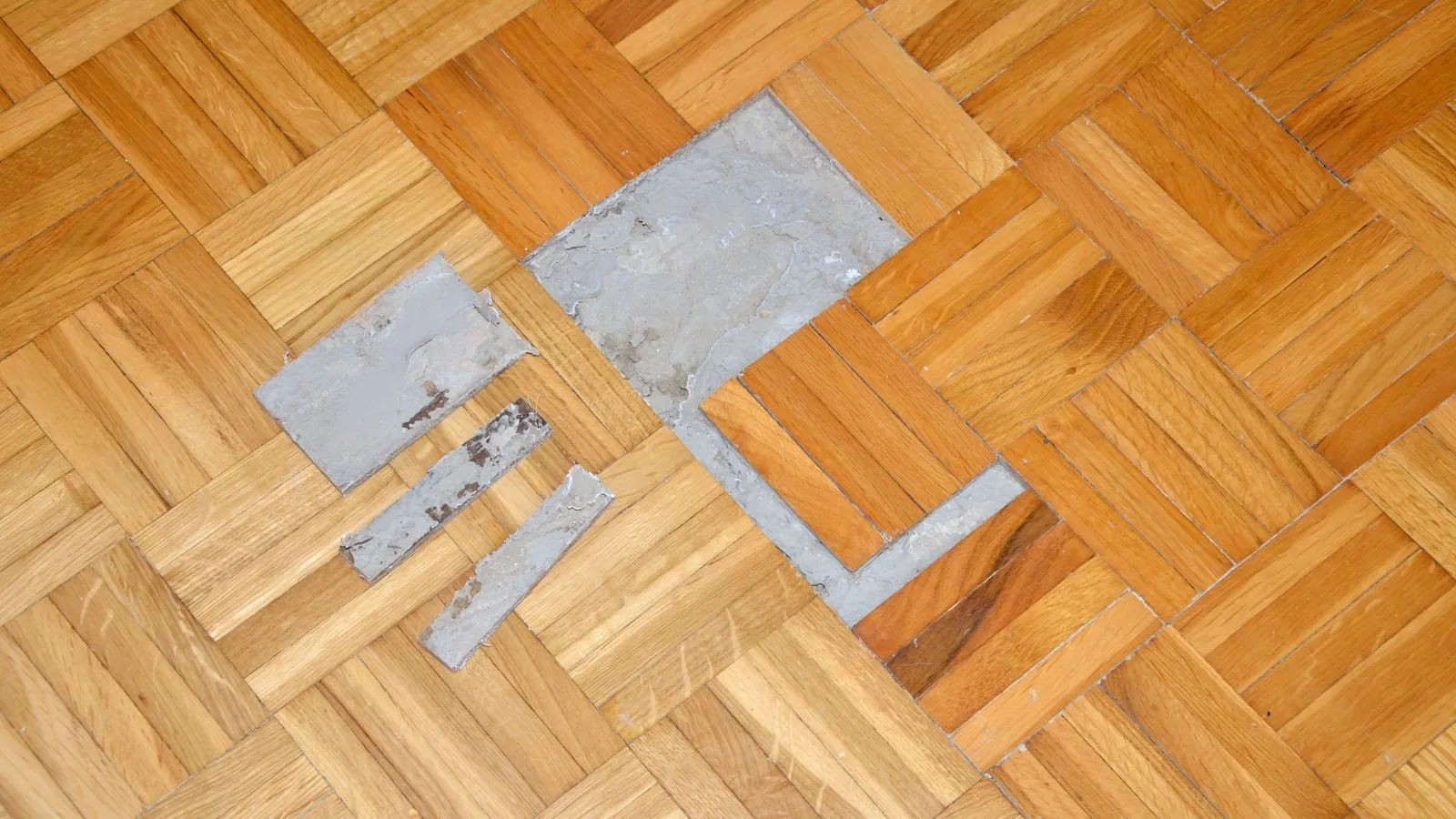
| Parquet | Individual blocks lift or loosen | Dry, re-glue or replace blocks |
Not sure this is the right page? Call and describe what you see.
☎ (814) 358-8169Wet wood floor? Call the line, any hour.
☎ (814) 358-8169How drying and repair are done
A moisture meter measures the boards, and a thermal camera shows wetness under the surface. The crew then places air movers and dehumidifiers, and may install mats or panels that pull water out of the floor from above, which can save boards that would otherwise be removed. Drying is slow, so patience matters.
After drying, the floor is checked. Cupping often reduces on its own. If it does not, sanding and refinishing can level it. Boards that are crumbling, stained through or buckled are replaced, and new boards are blended into the old ones before finishing.
Do not sand too soon
The most common mistake is sanding a floor that is still damp. If boards are sanded flat while wet, they will shrink as they dry and leave gaps and new cupping. Wait for readings that match the reference level, which the crew records.
The water also travels down. If water came from a bathroom or kitchen, the subfloor and the ceiling below may be wet. See kitchen water damage restoration and structural drying for how those areas are handled.
Wood floors in Johnstown homes
Many older Johnstown houses in Downtown, Minersville and Moxham have original hardwood under carpet, and those boards are worth saving because modern replacements rarely match. Tell the crew if you plan to refinish, and ask them to pull a corner of carpet to check.
In nearby towns such as Salix, floors over crawl spaces are exposed to moisture from below. If a wood floor cups without any leak, check the crawl space or basement for a damp source.
Watch for cupping and crowning
Cupping happens when the edges of boards rise as the bottom absorbs moisture. Crowning is the opposite, with the center higher than the edges, and it often shows up after a floor is sanded too early. Both are signs that the moisture level is not yet right.
Wait for moisture readings to settle before sanding or refinishing. A floor can flatten on its own as it dries, and sanding too early can cause new problems.
What affects the cost
Cost follows the size of the floor affected, the floor type, whether panels can dry it in place, how many boards are replaced and the refinishing needed. Scope and price are explained before work starts. Want your real number? Call (814) 358-8169.
A sudden leak damage claim often includes flooring, while long-term moisture may be excluded. Read your policy or ask your insurer. Take photos before any boards are lifted.
Safety checklist and standards
The drying and water category terms used here come from ANSI/IICRC S500, the industry standard for professional water damage restoration. For claims, the Pennsylvania Insurance Department advises photographing damage before cleanup and keeping receipts.
- Stay off floors that are soft, bowed or sagging.
- Do not sand or scrape old finishes in homes built before 1978 without lead-safe practices.
- Keep away from wet drywall that is sagging or crumbling.
- Turn off power to a wet room if you can reach the panel safely.
Frequently asked questions
Often, if drying starts quickly and the boards are not stained through. Many floors flatten as they dry, and sanding can level what remains.
Only after moisture readings match the dry reference, which can take days or weeks depending on the floor and the drying plan.
Rarely. Laminate swells at the edges and the core does not recover, so it is usually replaced.
Check for moisture from below, such as a damp crawl space or basement. Humidity can also cause cupping, and a moisture meter will tell you where the water is coming from.
Not sure the floor can be saved? Call and describe it.
☎ (814) 358-8169