
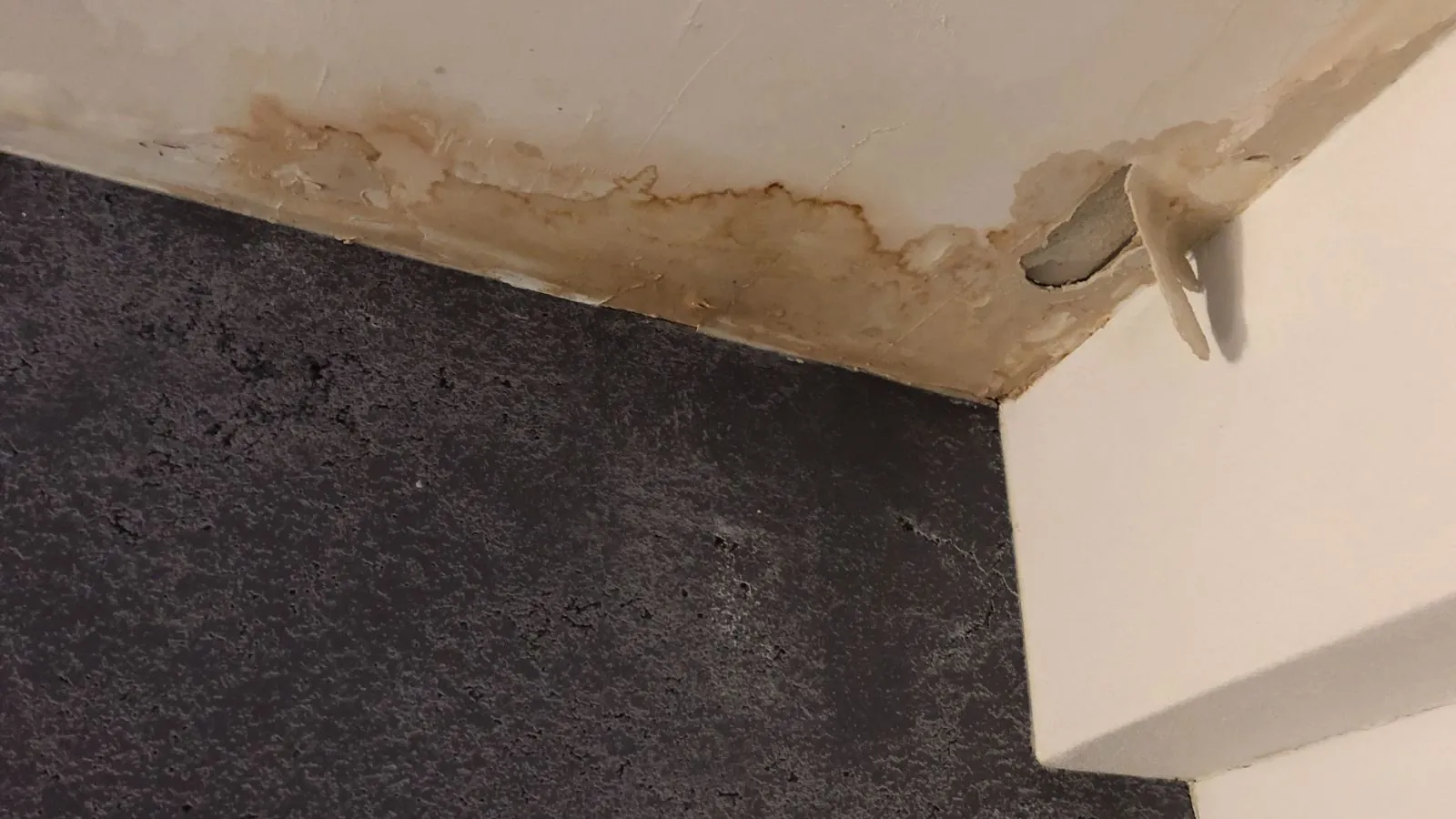
A slab leak is a pipe failing under the floor
A slab leak is water escaping from a supply or drain line that runs in or under a concrete slab. Slab leaks only apply to homes with a concrete slab floor, such as slab-on-grade additions, garages and some newer houses, so check which part of your home sits on a slab.
If you hear running water with every tap closed, see a hot spot on the floor or find damp flooring with no visible source, shut the main valve and call the 24/7 line.
Check the water meter before and after an hour with all taps closed. If the dial moves, water is escaping somewhere.
Signs of a leak you cannot see
The clues are indirect. A sudden rise in the water bill, the sound of running water, warm spots on the floor from a hot line, cracking or lifting flooring and a musty smell near the baseboards all point to hidden water. Because the pipe is under concrete, the water spreads sideways and upward into the flooring, wall bottoms and cabinets.
In a house with a basement, similar signs point to other sources first, so a plumber has to confirm the leak. We handle the water damage after it is found.
When a slab leak is an emergency
A pressurized slab leak runs around the clock and keeps feeding moisture to the floor above it. Hot-line leaks can also overheat flooring. Shutting the main valve stops the water immediately, which is why the line stays open at night and on weekends, with same-day response when crews are available.
Do not wait for the plumber before shutting the valve. If water has reached outlets or an appliance, call 911 or the utility before calling us.
Not sure this is the right page? Call and describe what you see.
☎ (814) 358-8169Hidden water under the floor? Call the dispatch line.
☎ (814) 358-8169Why the symptoms come first
Most people search for the symptom, not the term slab leak. A wet floor with no source, a high water bill and a warm patch under your socks are what bring a person to this page. Restoration begins with moisture mapping, which uses meters and a thermal camera to trace the wet area before anything is cut or lifted.
The plumber then pinpoints the line with acoustic or thermal equipment, and the repair is made by tunneling, rerouting the line or breaking the slab. Our part starts after the water is stopped.
Options after a slab leak is found
The plumbing fix is a separate decision, and each approach affects the damage left behind.
| Approach | What it involves | Effect on damage and drying |
|---|---|---|
| Spot repair through the slab | Cutting the concrete at the leak | Dust and demolition, but only the leak area is open |
| Rerouting the line overhead or in walls | New pipe is run around the slab | Less concrete work, with more drywall opened |
| Pipe lining or replacement | Rehabilitating the failing section | Depends on the pipe material and condition |
How drying works on a slab
Concrete holds moisture for a long time, so drying is slower than for drywall. The crew uses LGR dehumidifiers and air movers and checks moisture with meters on the slab surface and in the flooring above it. Wood and laminate flooring are often removed if they have cupped, and carpet over a wet slab needs pad replacement.
The drying target is written in the scope and checked at each visit, so a finishing contractor is not asked to lay new flooring over a damp slab. See structural drying and dehumidification for how that process is measured. A crawl space or a basement leak that looks similar is covered under crawl space water damage.
What affects the cost
Cost depends on the size of the wet area, the flooring involved, how much of the slab must be accessed for the plumbing fix, and how long drying runs. Scope and price are explained before work starts. Want your real number? Call (814) 358-8169.
Policies handle slab leaks differently, and the cost of reaching the pipe is sometimes treated separately from the damage it caused. Read your policy or ask your insurer, and have your plumber document the finding.
Related problems on other pages
Water from a failed line often reaches flooring, so see hardwood floor water damage and carpet water damage restoration. A leak that started with a burst supply line is covered on burst pipe water damage.
Safety checklist and standards
The drying and water category terms used here come from ANSI/IICRC S500, the industry standard for professional water damage restoration. For claims, the Pennsylvania Insurance Department advises photographing damage before cleanup and keeping receipts.
- Shut off the main water valve before anything else.
- Stay out of rooms where water is near outlets, panels or ceiling light fixtures.
- Do not walk under a bulging or sagging ceiling.
- Do not use plugged-in electrical items in or near the wet area.
Frequently asked questions
Yes. The 24/7 line is open every night and weekend. We offer same-day response when crews are available and never promise an arrival time.
Fewer homes here are built on slabs than in warmer regions, because basements are common. We have no local figure to give, and it is better to check Census housing data than to guess. When a slab leak does happen, the symptoms are the same as anywhere.
Check the water meter with all fixtures off, listen for running water and watch for warm floor spots. A plumber can pinpoint the leak with acoustic or thermal tools.
Wood and laminate over a leaking slab often have to be removed. Tile and sealed concrete may be saved. A moisture reading tells us.
Water is still spreading? The dispatch line is open around the clock.
☎ (814) 358-8169