
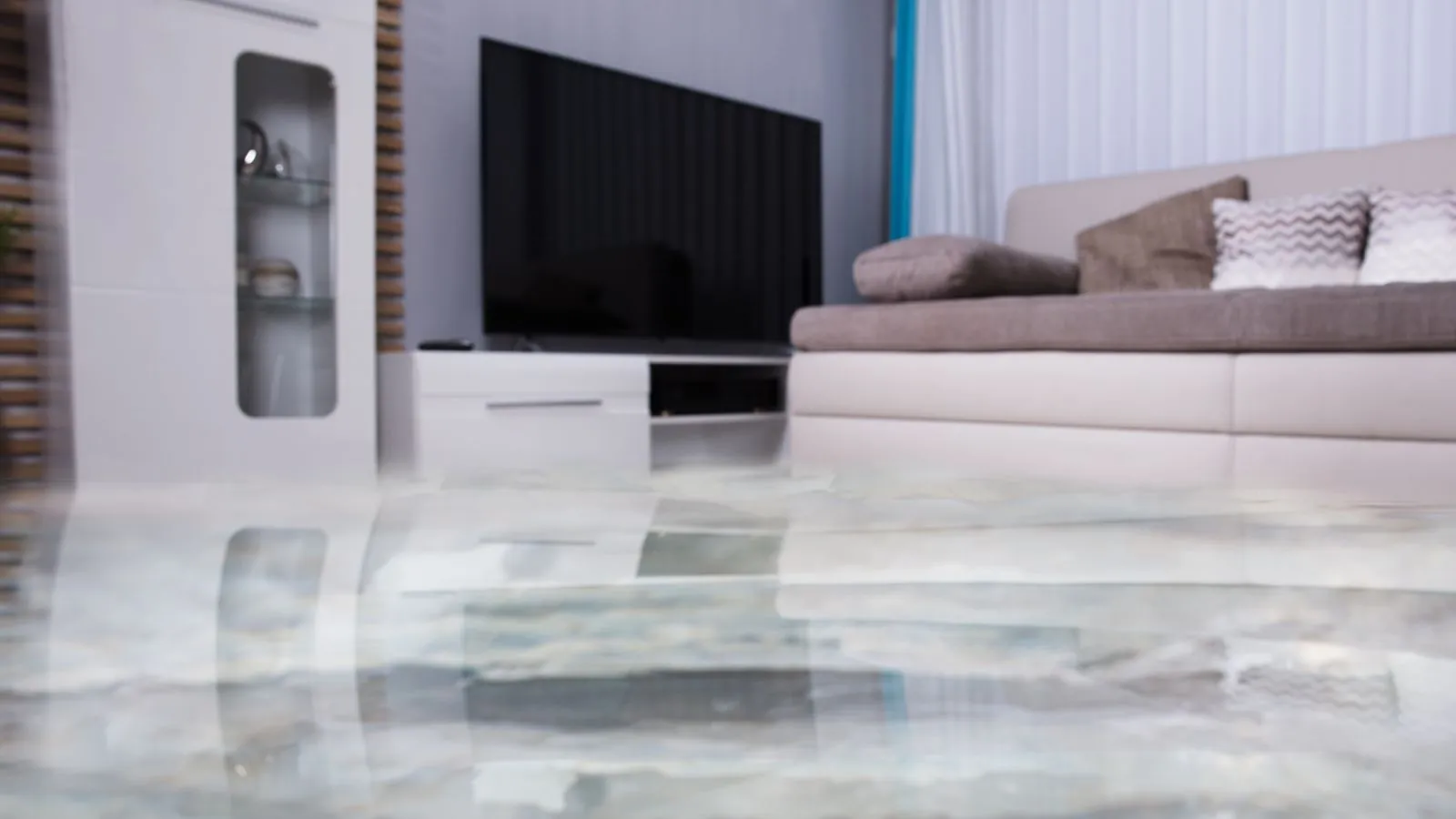
Storm water damage after the rain stops
Storm water damage is the water that wind and rain push through the building envelope, such as a roof breach, failed flashing, broken windows or siding. It is different from rising floodwater, which is covered in flood damage cleanup. In Johnstown, PA the 24/7 line is open before, during and after storms. Cover openings with a tarp if it is safe, move belongings away from wet areas and call us.
Do not climb on a wet or iced roof. A roofer or a tarp crew is the right person for that part.
When a storm leak is an emergency
Water coming in during a storm is an emergency. Insulation and drywall absorb it quickly, and saturated ceilings can collapse. Storms hit nights and weekends, so the line is open after hours, with same-day response when crews are available. Do not expect crews to arrive while the storm is still dangerous, and we do not promise an arrival time.
If trees or limbs are down on the house or power lines, stay away and call 911 or the utility first. Wires in water are an immediate hazard.
Storm water inside the house? Call the line any hour.
☎ (814) 358-8169Not sure this is the right page? Call and describe what you see.
☎ (814) 358-8169Where storm water gets in
Most storm leaks enter in a handful of ways.
| Entry point | What happens | Where damage shows |
|---|---|---|
| Roof breach or lifted shingles | Rain runs through decking and insulation | Ceilings and upper walls. See ceiling water damage repair |
| Window or door failure | Wind-driven rain blows in | Sills, walls, floors below |
| Siding and flashing gaps | Water runs inside the wall cavity | Interior walls, sometimes far from the opening |
| Clogged gutters or downspouts | Water spills against the foundation | Basement or crawl space. See basement water damage cleanup |
Storms in the Johnstown valley
Johnstown sits in a river valley, and heavy storms can stall over the hills. The July 1977 storm dropped nearly 12 inches of rain in 24 hours, six dams failed and the flood killed dozens. That was extreme, but smaller storms still put water through weak points in roofs and walls, and they raise creeks quickly.
After any big storm, check the attic, the ceilings, the basement and window trim. Hillside homes may see runoff against the uphill foundation wall. The National Weather Service posts forecasts and warnings, so use them rather than guesswork.
How the crew works after a storm
The crew first makes sure the building is safe, then extracts water and removes wet insulation and drywall. Moisture mapping shows where water traveled behind siding and trim. Air movers and dehumidifiers dry the structure, and readings are logged for your insurer.
A roofer or contractor handles temporary and permanent repairs to the building envelope. Coordinating timing matters, because drying will not hold if rain keeps getting in. In nearby places like Seward, the same sequence applies.
Documenting storm damage
Photograph the damage from outside and inside before temporary repairs. Keep receipts for tarps and emergency work. The Pennsylvania Insurance Department advises making only the temporary repairs needed to prevent further damage until your insurer approves permanent repairs.
Ask your insurer whether wind and rain are covered under your policy, and whether any deductible is a flat amount or a percentage.
What affects the cost
Cost depends on how much water entered, which rooms were affected, how much insulation and drywall must be removed, drying time and finish repairs. Scope and price are explained before work starts. Want your real number? Call (814) 358-8169.
Wind and rain damage is often covered under a homeowners policy, though wear and tear usually is not. Read your policy or ask your insurer.
Safety checklist and standards
The drying and water category terms used here come from ANSI/IICRC S500, the industry standard for professional water damage restoration. For claims, the Pennsylvania Insurance Department advises photographing damage before cleanup and keeping receipts.
- Stay out of moving or deep water, and keep away from downed lines.
- Do not enter a basement if water is near the panel, outlets or a furnace.
- Call the utility if you smell gas or see sparks.
- Wear boots and gloves for any contact with floodwater.
Frequently asked questions
Yes. The 24/7 line is open every night, weekend and holiday. We offer same-day response when crews are available, but we do not promise an arrival time during an active storm.
Not always. Rain coming through a roof is usually cleaner than water rising from a creek. Floodwater is treated as contaminated, and it is covered by different insurance.
Only if you can do it safely from the ground or a stable position. A wet roof is dangerous, and a roofer can tarp it quickly.
The outside damage, the inside water stains and the contents you moved, taken before cleanup. Keep receipts for emergency repairs.
Water is still spreading? The dispatch line is open around the clock.
☎ (814) 358-8169