
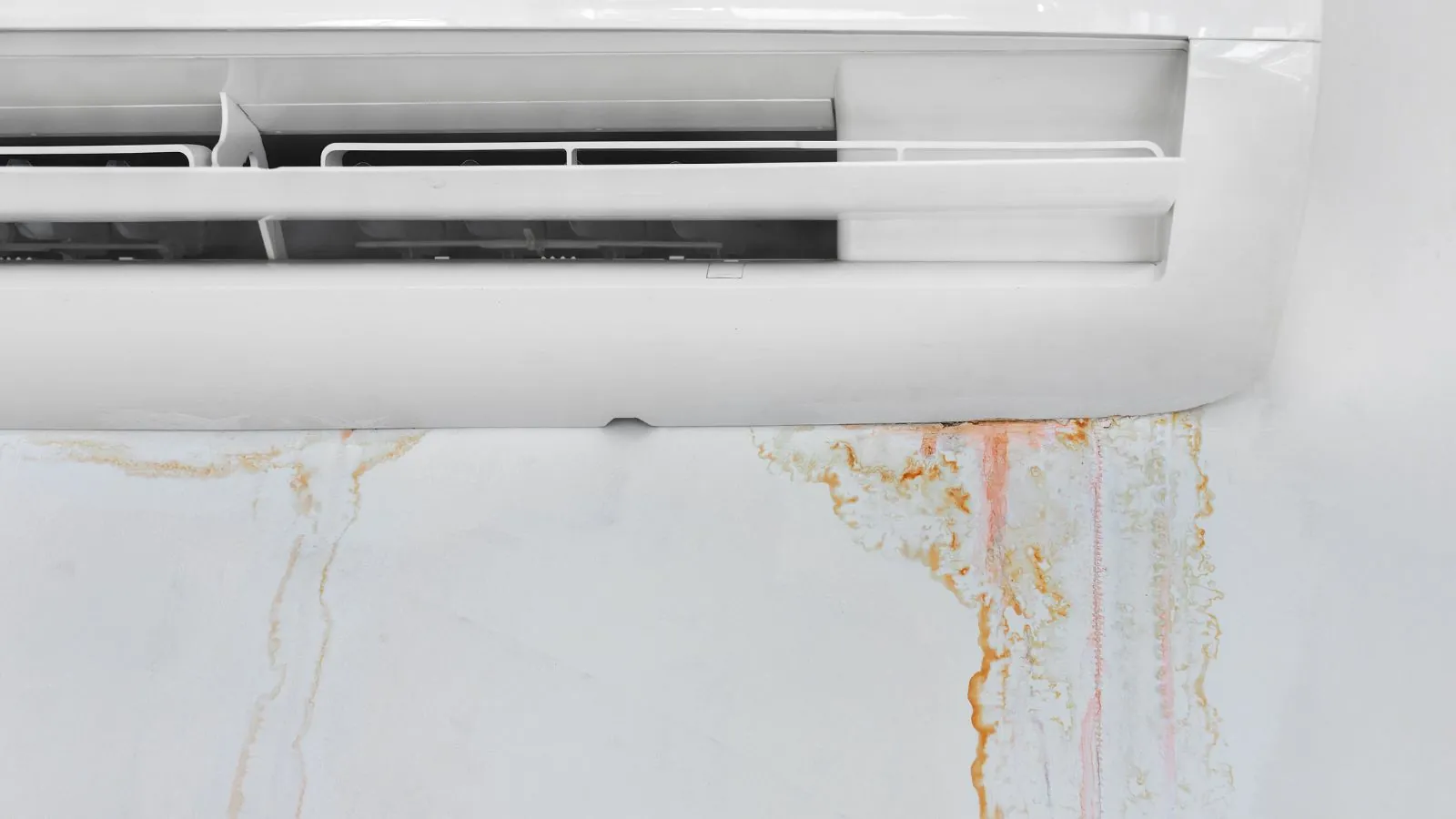
Where AC leak water comes from
Air conditioning removes moisture from the air, and that water leaves the system through a condensate drain line. When the line clogs, the drain pan rusts through or the evaporator coil freezes and then thaws, the water overflows into the ceiling, closet or wall near the unit. AC leak water damage repair is the cleanup and drying after that happens, and it starts by stopping the unit so it stops making more water.
Turn the thermostat to off. Then put a bucket or towels where the water is falling, and call us if the damage is spreading.
Signs an AC unit is leaking
Look for a drip from the air handler, a damp spot on a nearby ceiling, a puddle in a closet, musty air from the vents and a drain line that is dry when it should be dripping. A wall-mounted unit can leave streaks down the wall below it. Stains that look orange or pink may be rust from the pan or fittings.
Because the water is slow, it can go unnoticed for weeks. This is one reason AC leaks are not usually treated as emergencies, although they become one if the water reaches a light fixture or the ceiling starts to sag.
Common HVAC leak causes
Different parts of the system leak for different reasons.
| Cause | What happens | Who fixes it |
|---|---|---|
| Clogged condensate line | Algae or debris blocks the drain and the pan overflows | HVAC technician clears the line |
| Rusted or cracked drain pan | Water drips out of the pan | HVAC technician replaces the pan |
| Frozen evaporator coil | Ice melts and overflows the pan | HVAC technician diagnoses airflow or refrigerant |
| Disconnected line or bad float switch | Drain no longer carries water out | HVAC technician |
Not sure this is the right page? Call and describe what you see.
☎ (814) 358-8169How the drying and repair work goes
The cause is repaired by an HVAC technician. The crew starts after that, mapping moisture with a meter and thermal camera, removing stained or soft drywall and wet insulation and drying the cavity with air movers. Because attic units can drip for a long time, insulation is often saturated well beyond the stain.
If the leak soaked a ceiling, our ceiling water damage repair page explains how those repairs are done. If the unit sits above a finished room, expect the work to include a stain-blocking primer so the mark does not return.
AC leaks in Johnstown homes
Johnstown summers can be humid, and units that run hard in July and August produce a lot of condensate. A condensate line that was fine in June can clog by late summer. Have a technician flush the drain line each spring, and add a float switch that shuts the unit off if the pan fills.
Window and wall units leak differently, since water exits at the back or bottom of the unit. If you rent, tell the landlord promptly and photograph the damage. For homes in Sidman and other outlying areas, the same maintenance applies.
Keeping the condensate line clear
The drain line carries condensate away from the air handler, and it can clog with algae and dust. A yearly flush with a cup of white vinegar poured into the access port helps. Many systems also have a float switch that shuts the unit off when the pan fills, which is worth adding if yours does not.
If you find water around the unit, turn the system off at the thermostat first so it stops making more.
What affects the price of AC leak repair
Cost follows the size of the wet area, whether insulation or framing is affected, how long the leak ran and how much finish work is needed afterward. Scope and price are explained before work starts. Want your real number? Call (814) 358-8169.
Insurers often treat slow condensate leaks as maintenance issues, while a sudden failure may be covered. Read your policy or ask your insurer, and keep records of any service on the system.
Related problems on other pages
A wet ceiling below an air handler is covered on ceiling water damage repair. Wet insulation and framing are dried as described on structural drying, and carpet below the unit is covered on carpet water damage restoration.
Safety checklist and standards
The drying and water category terms used here come from ANSI/IICRC S500, the industry standard for professional water damage restoration. For claims, the Pennsylvania Insurance Department advises photographing damage before cleanup and keeping receipts.
- Close the supply valve to the appliance or turn the system off at the thermostat.
- Unplug the unit only if the floor and your hands are dry.
- Keep children and pets out of the wet room.
- Do not run wet-dry equipment on wet ground without proper outlets.
Frequently asked questions
It becomes one if water is dripping through a light fixture, soaking a ceiling or spreading across a finished floor. For a slow drip, switch the unit off, catch the water and call during business hours or any time you are worried. The 24/7 line is open either way.
Many homeowners flush the line with a wet-dry vacuum, but if water has already damaged a ceiling or wall, have an HVAC technician fix the cause so it does not repeat.
A moisture meter or thermal camera will show it. Wet fiberglass looks flattened and feels heavy, and it should be removed even if the drywall looks fine.
Not if the leak is fixed, the cavity is dry and a stain-blocking primer is used before painting.
Not sure how far the water went? The line is open any hour.
☎ (814) 358-8169