
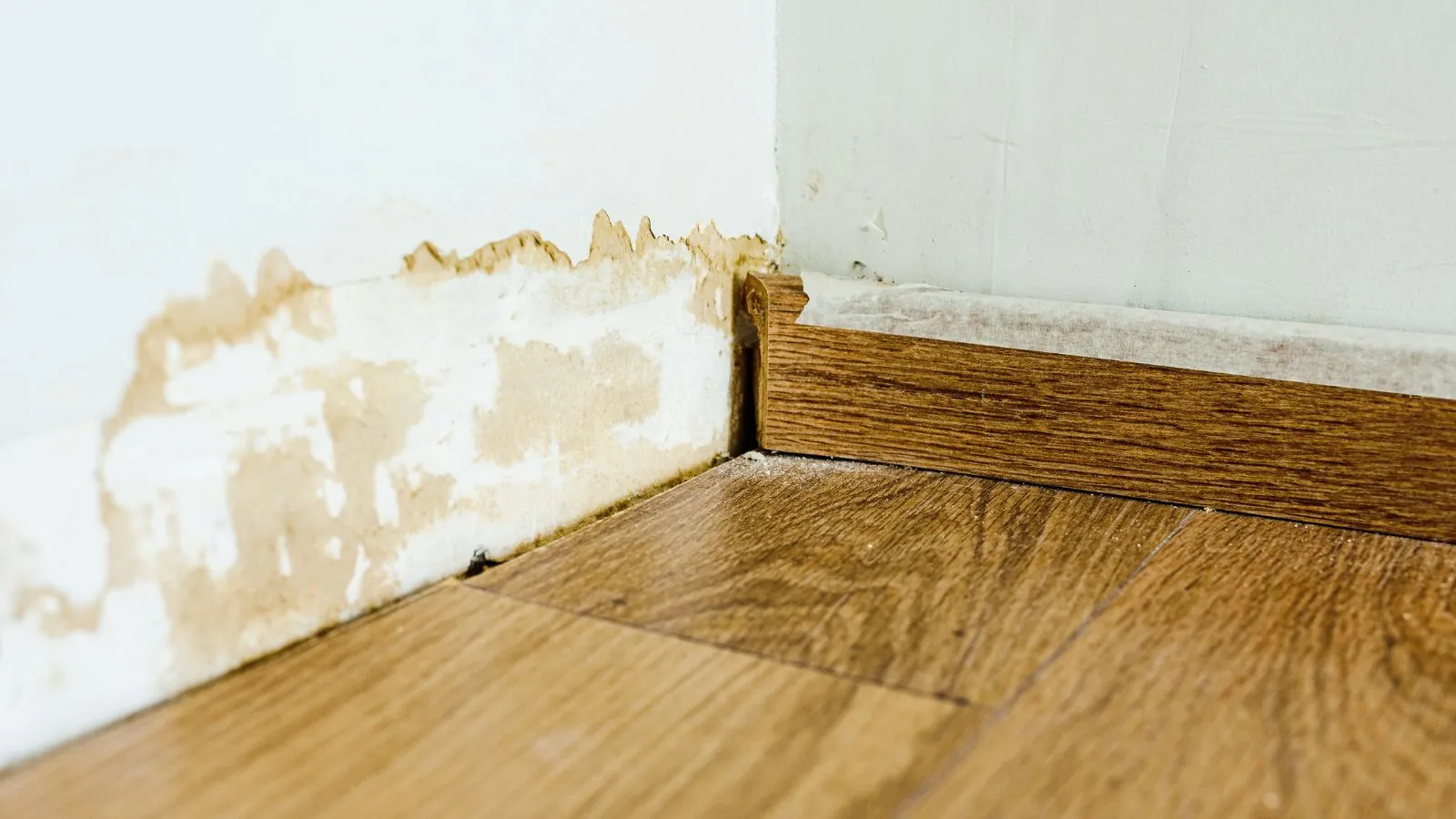
Water in a wall is a hidden problem
Walls hold wiring, plumbing, insulation and studs, and water in a wall travels inside the cavity, so the stain you see is rarely the whole damage. Wall and drywall water damage repair is the assessment, drying and rebuild of walls after a leak. Shut off the water source, take photos and call us before cutting anything.
Do not paint over a wet wall. Paint hides the stain without drying the cavity or fixing the cause.
Signs of water in the wall
Bubbling or peeling paint, brown stains, soft or crumbling drywall, warped baseboards, a musty smell and wall seams that open up are the usual signs. Water on baseboards often rises up the drywall by wicking, so a stain 12 inches high may mean the lower part was wet.
Cool spots on a thermal camera and high readings on a moisture meter show where wetness hides, even where the surface looks fine.
Drywall, plaster and baseboards after water
Different wall materials respond differently.
| Material | What water does | Typical result |
|---|---|---|
| Drywall | Absorbs, softens, stains and may grow mold | Cut out above and below the wet line if soft or stained |
| Plaster and lath | Swells, may crack or loosen | Dried when sound, replaced in sections if not |
| Baseboard and trim | Warps and stains | Removed to dry the wall behind, often replaced |
| Insulation | Holds water against framing | Removed and replaced if wet |
Not sure this is the right page? Call and describe what you see.
☎ (814) 358-8169Wall wet or stained? Call the line any hour.
☎ (814) 358-8169How the repair process goes
The crew measures the wet area, then removes saturated drywall in straight cuts so a patch is easier. Wet insulation is pulled and the stud cavity is dried with air movers or small-hole drying systems. Moisture readings are taken in the studs and plates as well as the surface.
After drying is confirmed, new drywall is hung, taped and finished, then primed with a stain-blocking primer and painted. If the room has textured walls, the texture is matched. The overall drying plan is explained in structural drying and dehumidification.
Plaster in older Johnstown houses
Many older homes in Downtown, Minersville and Moxham have plaster on lath. Plaster is heavier and thicker than drywall, and it can be saved if it is firm. When plaster feels loose or crumbles, sections are removed and patched. Ask for a tap test and a moisture reading before demolition.
The cause often lies above or beside the wall. A leak in the ceiling above can run down inside the wall, so look at ceiling water damage repair, and a failed supply line is covered under burst pipe water damage.
Permits and finish work
The City of Johnstown requires building permits for repairs and renovations, though painting and flooring are exempt. Ask the Laurel Municipal Inspection Agency at (814) 471-0424 whether your scope needs one. Outside the city, in places like Sidman, the township office handles local questions.
Always ask for the repair scope in writing. A good scope names the walls, the materials, the finish level and the drying readings that must be met first.
When to cut the wall open
Wet drywall that is clean and has not been wet for long can sometimes be dried in place with the help of small holes and air movers. If the board is sagging, crumbling or has been wet for days, it is usually cut out. Wet insulation behind it is removed too.
A common method is a flood cut, where the wall is cut a foot or two above the wet line so the framing can dry. Your crew should explain where they plan to cut and why.
What affects the cost
Cost depends on the wall area, whether insulation and trim are replaced, the number of coats and texture matching, drying time and the access. Scope and price are explained before work starts. Want your real number? Call (814) 358-8169.
A sudden pipe failure is often covered, and so is the resulting wall repair, though maintenance issues may not be. Read your policy or ask your insurer, and photograph the wall before cutting.
Local examples
Houses with original plaster and trim, such as those in Old Conemaugh Borough, may need slower drying.
Safety checklist and standards
The drying and water category terms used here come from ANSI/IICRC S500, the industry standard for professional water damage restoration. For claims, the Pennsylvania Insurance Department advises photographing damage before cleanup and keeping receipts.
- Stay off floors that are soft, bowed or sagging.
- Do not sand or scrape old finishes in homes built before 1978 without lead-safe practices.
- Keep away from wet drywall that is sagging or crumbling.
- Turn off power to a wet room if you can reach the panel safely.
Frequently asked questions
Sometimes. Drywall that stayed wet for a short time with clean water may dry in place. If it is soft, stained or has been wet for days, it is removed.
Generally a few inches above the highest reading of moisture, since water wicks upward. Moisture meters guide the cut line.
Because the cavity stays wet and mold can grow behind the paint. The leak must be fixed and the wall dried first.
If water is still flowing, yes, and the 24/7 line is open. A dry stain is less urgent but still worth checking.
Not sure how far the water went into the wall? Call the line.
☎ (814) 358-8169