
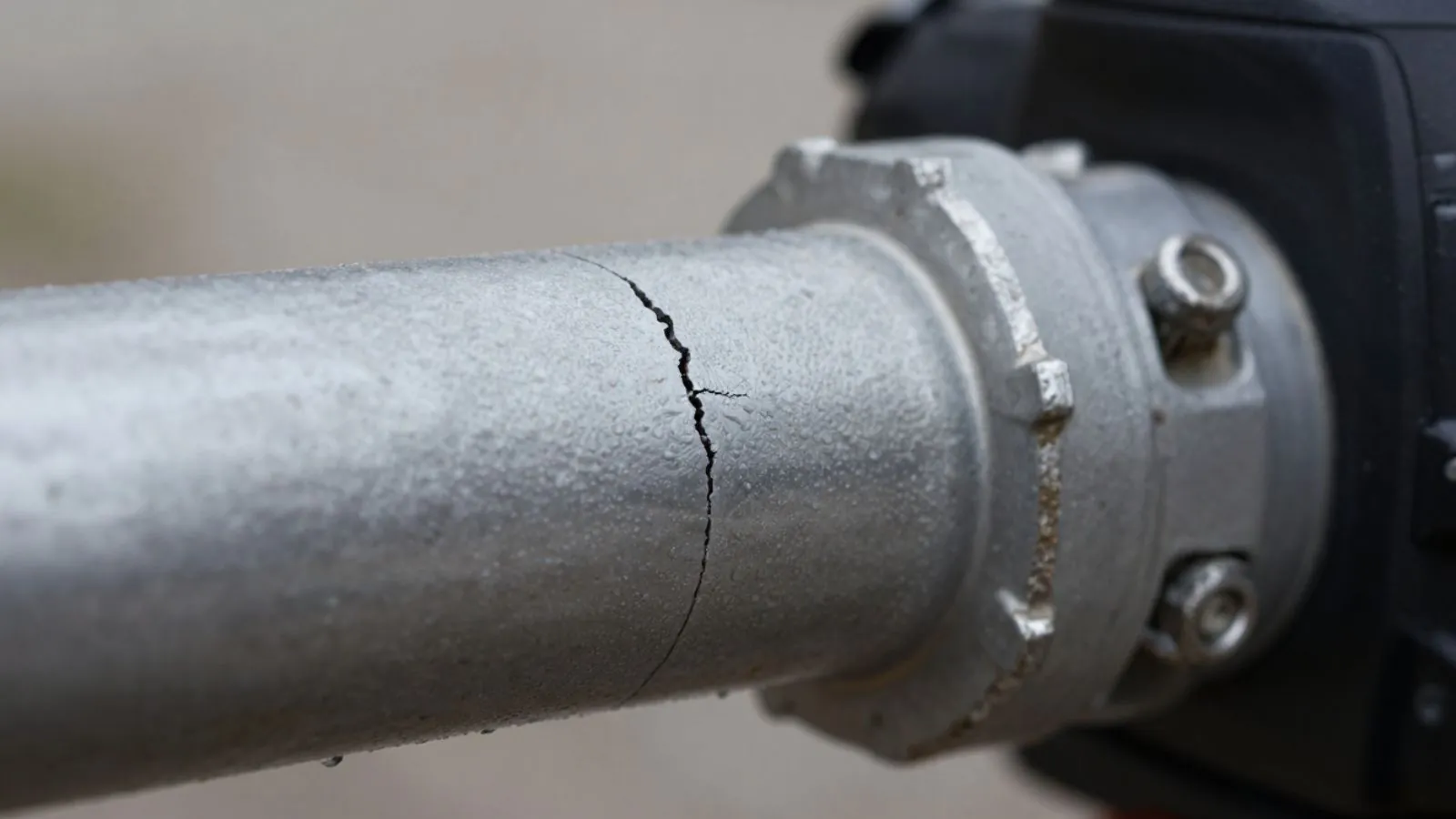
The damage shows up when the ice melts
A frozen pipe often does not leak while it is frozen. The ice blockage holds the break closed, and the water pours out when the pipe warms up. In Johnstown, PA the 24/7 emergency line takes frozen pipe calls any hour. If you see frost on a pipe or the water has stopped at a faucet, shut the main valve before the thaw starts, open the faucet and call us if water appears.
Do not use a torch or open flame. A hair dryer or a warm towel is safe, but a split pipe can still release water as it warms.
When a thawing pipe is an emergency
Water that appears after a thaw is a live leak, and it can run for hours before anyone notices, especially if the break is in an unheated space. Cold snaps hit at night and on weekends, so the line stays open then too, and same-day response is offered based on crew availability.
Water in a ceiling, a light fixture or an outlet is a safety problem first. Stay out of the room, call 911 or the utility if you are unsure about electricity, and then call us.
Pipe thawing into a flood? The dispatch line is open.
☎ (814) 358-8169Not sure this is the right page? Call and describe what you see.
☎ (814) 358-8169Where pipes freeze in a Johnstown house
Pipes in exterior walls, unheated crawl spaces, garages, attic runs and under kitchen sinks on outside walls freeze first. Winter cold is a normal part of the year in the Allegheny foothills, so older homes with limited insulation around supply lines are at the most risk.
Frequency is a question for the National Weather Service. Check its climate normals for the number of freezing days in Johnstown rather than relying on a guess. What matters for you is the mechanism: water expands as it freezes and splits the pipe, usually at a joint or a weak point.
What to check after a pipe freezes
Run through these places before you assume the damage is only where you saw water.
| Area | What to look for | Why it matters |
|---|---|---|
| Exterior walls | Damp or stained drywall and cold spots | Ice splits often sit behind finishes |
| Crawl space or basement | Dripping, frost on joists, a wet floor below | Under-floor leaks hide for days. See crawl space water damage |
| Ceiling below a bathroom | Brown stains or bowing paint | Water travels along joists. See ceiling water damage repair |
| Water meter and main | Meter spinning with all taps closed | A running meter means water is still escaping |
How restoration proceeds
After the plumber repairs the split, extraction removes standing water and the crew maps moisture with meters and a thermal camera. Wet insulation and drywall are removed where readings call for it, then air movers and dehumidifiers dry the cavity. Heat matters, because drying in a cold house is slow, so the thermostat should be set to a normal level unless the crew advises otherwise.
Prevention is cheaper than cleanup. Insulate exposed lines, let a faucet drip during a hard freeze and know where your main shutoff is before the weather turns. The guide on burst pipe water damage covers the same failure when ice was not the cause.
What affects the price
Cost depends on how long the water ran, how many floors it reached, whether insulation got saturated and how long drying takes in a cold structure. Scope and price are explained before work starts. Want your real number? Call (814) 358-8169.
Many policies treat sudden freeze damage differently from damage caused by neglect, for example a vacant house with the heat off. Read your policy or ask your insurer, and photograph the split pipe before the plumber replaces it.
Safety checklist and standards
The drying and water category terms used here come from ANSI/IICRC S500, the industry standard for professional water damage restoration. For claims, the Pennsylvania Insurance Department advises photographing damage before cleanup and keeping receipts.
- Shut off the main water valve before anything else.
- Stay out of rooms where water is near outlets, panels or ceiling light fixtures.
- Do not walk under a bulging or sagging ceiling.
- Do not use plugged-in electrical items in or near the wet area.
Frequently asked questions
Yes. The 24/7 line is open on cold nights, weekends and holidays. We offer same-day response when crews are available but do not promise an arrival time.
You can warm it slowly with a hair dryer or warm towels while a faucet is open. Never use a torch, and shut the main valve first if you can reach it, because a split pipe will leak as it thaws.
Watch the water meter with every tap closed, and listen for hissing in walls. A pipe can be split behind drywall for hours before a stain appears.
Keep the home at a normal temperature. Warm air helps the structure dry, but check with the crew before cranking the heat if walls are wet, since the dry-out plan may call for a specific setup.
Water is still spreading? The dispatch line is open around the clock.
☎ (814) 358-8169