
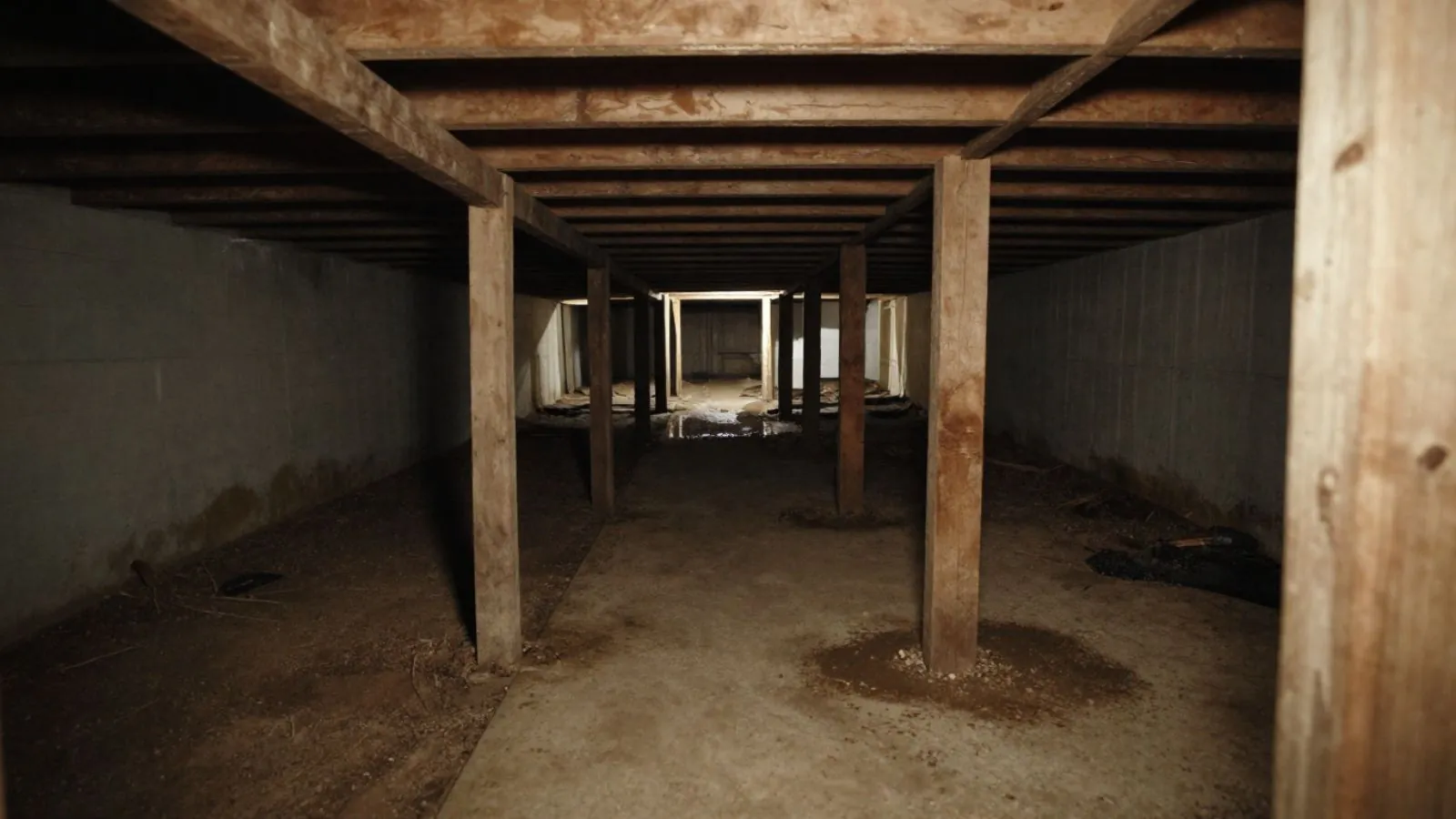
What water does under the floor
A crawl space is the shallow, unfinished void beneath a house, and it is a place where moisture collects quietly. Water can come from a leaking pipe, groundwater after heavy rain, a failed vapor barrier or condensation on cold surfaces. Crawl space water damage cleanup removes the water, dries the joists, subfloor and insulation and deals with what the moisture left behind.
If you see standing water, shut off the main valve first in case the source is a pipe, and call the 24/7 line.
Signs a crawl space is wet
A musty smell in the house, cold or springy floors, sagging insulation, rusty nails and fasteners, dark staining on joists and condensation on ducts and pipes are common signs. Floors above a wet crawl space can also feel cold or uneven because the subfloor has softened.
Pests are drawn to damp spaces too. Wood that stays above a moisture level for a long period can rot, which is why the joists and sill plates are checked with a meter during the assessment.
Wet crawl space or normal moisture?
Some humidity is normal. Look at how the space behaves after rain and in summer.
| What you notice | What it suggests | What to do |
|---|---|---|
| Puddles after rain | Groundwater or a drainage issue | Extraction, then address grading and gutters |
| Dripping pipes or a steady wet spot | Plumbing leak | Shut off the water and call a plumber |
| Condensation on ducts in summer | Humid air meeting cold surfaces | Dehumidifier or vapor control |
| Wet insulation hanging from joists | Past leak or moisture | Remove and replace after drying |
Not sure this is the right page? Call and describe what you see.
☎ (814) 358-8169How cleanup and drying work
The crew extracts any standing water with small pumps and wet vacuums, since the space is cramped and has to be worked by hand. Wet insulation is removed and bagged. Air movers and compact dehumidifiers are set up with ducting where needed, and moisture readings are taken on joists and the subfloor.
Because access is hard, the crew documents conditions with photos taken before and after. Heavy mold growth is a different job from simple drying, and it needs a specialist in your area. We do not offer mold remediation, and it is better to say so than to imply otherwise.
Moisture control afterward
Drying the space is half the job. A ground vapor barrier, working gutters with downspouts that carry water away from the foundation and correct grading all reduce the chance of a repeat. Sealing a vented crawl space is a choice that building professionals debate, so ask your inspector what fits your house.
Your local building department can say whether work like encapsulating needs a permit. The City of Johnstown requires building permits for repairs and renovations, with painting and flooring exempt, and the Laurel Municipal Inspection Agency handles them at (814) 471-0424.
Crawl spaces in the Johnstown area
Crawl spaces are found under some additions, porches and houses in the area, including in communities such as Elton. If you are unsure what is under your home, a flashlight and a look through the access hatch is a start.
If the water came from a burst line, see burst pipe water damage, and if the home is flooded from outside, flood damage cleanup explains the process.
What affects the cost
Cost depends on the amount of standing water, how much insulation must be removed, the difficulty of access, drying time and any moisture control upgrades you choose. Scope and price are explained before work starts. Want your real number? Call (814) 358-8169.
Sudden plumbing leaks are often covered, while seepage and long-term humidity are commonly excluded. Read your policy or ask your insurer.
Related problems on other pages
Wet framing and insulation under the house are dried as described on structural drying. Standing water is removed as on water extraction, and a failed line below the floor may be a burst pipe problem.
Safety checklist and standards
The drying and water category terms used here come from ANSI/IICRC S500, the industry standard for professional water damage restoration. For claims, the Pennsylvania Insurance Department advises photographing damage before cleanup and keeping receipts.
- Stay out of moving or deep water, and keep away from downed lines.
- Do not enter a basement if water is near the panel, outlets or a furnace.
- Call the utility if you smell gas or see sparks.
- Wear boots and gloves for any contact with floodwater.
Frequently asked questions
Standing water from a plumbing leak is urgent, and the 24/7 line is open for it. A damp crawl space that has been slowly humid for years is less urgent, but it still needs a plan.
A vapor barrier helps, but only after the water is gone and the source is fixed. Laying plastic over wet soil and wet joists traps moisture.
We dry the space and remove wet materials. Mold remediation is a separate specialty that we do not offer here, so ask your inspector for a mold specialist if you find heavy growth.
It usually helps a lot, provided the source is fixed and wet insulation is removed. If the smell persists, check for hidden damp spots in the subfloor.
Water is still spreading? The dispatch line is open around the clock.
☎ (814) 358-8169