
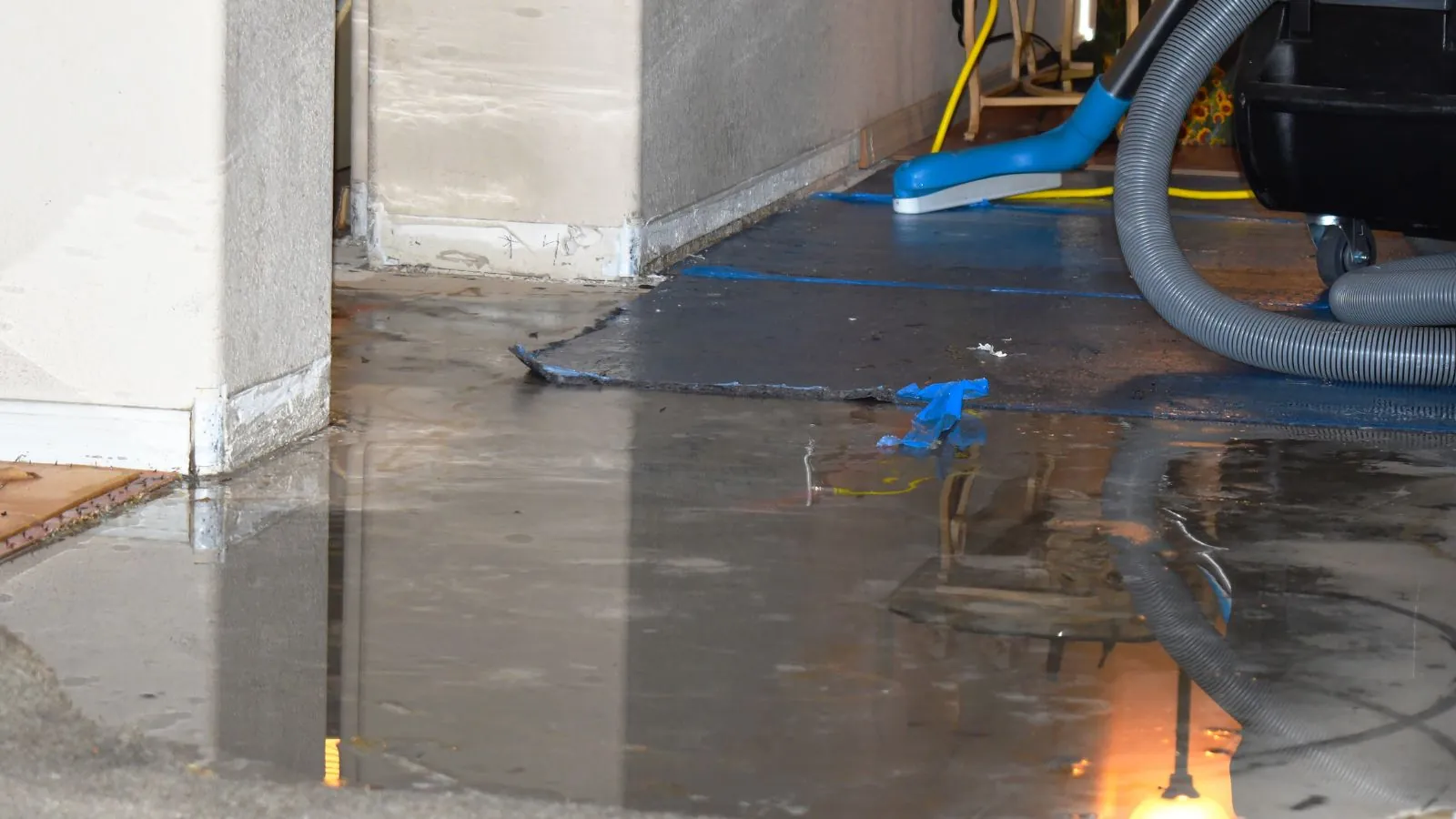
Water extraction starts the moment water stops rising
Water extraction is the first job after a leak or flood. It means pulling standing water out of the building before it soaks into subfloor, framing and contents. In Johnstown, PA the 24/7 emergency line takes calls for emergency water removal every day of the year, and the sooner pumps and extraction units start, the more flooring and drywall can be saved.
While you wait, stop the source if you can, keep everyone out of the water and lift valuables onto furniture or counters. Do not use a household vacuum on standing water.
When standing water is an emergency
Any water deeper than a puddle that is sitting on a floor you cannot see through is an emergency. Water that reaches outlets, baseboard heaters, a furnace or a breaker panel is a bigger one, and electricity comes first. Call 911 or the utility if there is any electrical or gas concern, and only then call us.
Water that touches carpet pad and drywall begins wicking upward right away. After hours the stakes rise because the building stays wet overnight, so night and weekend calls get the same handling as daytime ones.
Standing water now? The line is open at any hour.
☎ (814) 358-8169Not sure this is the right page? Call and describe what you see.
☎ (814) 358-8169How extraction is done
Technicians match the tool to the water. Submersible pumps move deep water out of a basement through a discharge hose. Portable and truck-mounted extraction units pull water from carpet and pad, and floor wands lift water off hard surfaces and out of low spots. A squeegee-and-wet-vac approach is only right for a thin film.
After the bulk water is out, the crew takes moisture meter readings on walls, trim and subfloor. Those readings show what is still wet and hand off the job to structural drying and dehumidification, because extraction alone never leaves a building dry.
Which water category are you dealing with?
The source of the water decides how it is handled. Category 1 comes from a clean supply line. Category 2 carries some contamination. Category 3 is grossly contaminated.
| Category | Typical sources | What changes |
|---|---|---|
| Category 1 | Broken supply line, overflowing sink, melted ice | Water is extracted and materials can often be dried in place |
| Category 2 | Dishwasher or washing machine discharge, sump overflow | Porous materials like carpet pad are usually removed, and surfaces are cleaned |
| Category 3 | Sewage, river or creek flooding, long-standing water | Crew wears protective gear and porous materials are removed. See sewage backup cleanup |
Extraction around Johnstown rivers and hillsides
Johnstown sits where the Stonycreek and Little Conemaugh rivers meet, and the 1977 flood put six feet of water in the city by dawn. Most basement water today is smaller, such as a failed sump pump during heavy rain or groundwater pushing through a wall. Still, if floodwater came in from a river or creek, treat it as Category 3 and call before touching it.
Homes on Johnstown hillsides can send runoff toward foundations, and a basement in Cambria City or Moxham sits lower than the street. Crews in Salix and other nearby towns see the same pattern after a stalled storm, so check the sump pump before a forecast calls for heavy rain.
What extraction does not do
Extraction does not dry a house. Wet drywall, insulation and subfloor keep holding moisture after the water is gone, and that is where mold starts. A written plan covers drying, equipment placement and follow-up readings, so ask for it in the scope.
It also does not repair damage. If drywall has to be cut out, that is a separate step covered under wall and drywall water damage repair.
What shapes the price of water extraction
Cost depends on how much water is present, its category, how many rooms are wet, how long it has been standing and how hard it is to reach. Deep basement water needs more equipment than a wet kitchen. We explain scope and price before work starts, and we do not quote exact figures sight unseen. Want your real number? Call (814) 358-8169.
Sudden and accidental water damage is often covered by homeowners insurance, while flooding generally needs a separate flood policy. Check your policy or ask your insurer, and photograph the water before it is removed.
Safety checklist and standards
The drying and water category terms used here come from ANSI/IICRC S500, the industry standard for professional water damage restoration. For claims, the Pennsylvania Insurance Department advises photographing damage before cleanup and keeping receipts.
- Do not use a household vacuum on standing water.
- Treat sewage or flood water as contaminated and wear gloves and boots.
- Leave the home and call 911 or the gas utility if you smell gas.
- Wash hands before eating after any contact with wet materials.
Frequently asked questions
Yes. The line is open 24/7, and a flooded basement at 2 a.m. is treated the same as one at noon. We offer same-day response when crews are available but do not promise a specific arrival time.
A small kitchen spill can be extracted in an hour or so. A flooded basement can take several hours of pumping and extraction, followed by days of drying. Depth, access and category all change the answer.
For a thin film of clean water, yes. For anything deeper, or water that touched carpet pad, insulation or drywall, a hardware-store vacuum leaves too much moisture behind, and hidden dampness is how mold starts.
The Greater Johnstown Water Authority manages the sanitary sewer system in the City of Johnstown and can be reached at 814-533-4300. If sewage is in your house, call them about the main and call us about the cleanup.
Water is still spreading? The dispatch line is open around the clock.
☎ (814) 358-8169