
My house is damp and will not dry
Most people reach this page after noticing the signs, not the trade term. Walls that feel cool, a floor that is still damp days after a leak, a musty smell that returns and fans that never seem to catch up all mean the structure is holding water. Structural drying is the process of removing that moisture from framing, subfloor, drywall and concrete using controlled airflow and dehumidification.
It is also called water mitigation, the work that follows extraction and comes before repair. The goal is to reach a written dry standard so nothing is closed up wet.
Moisture mapping: finding the wet areas
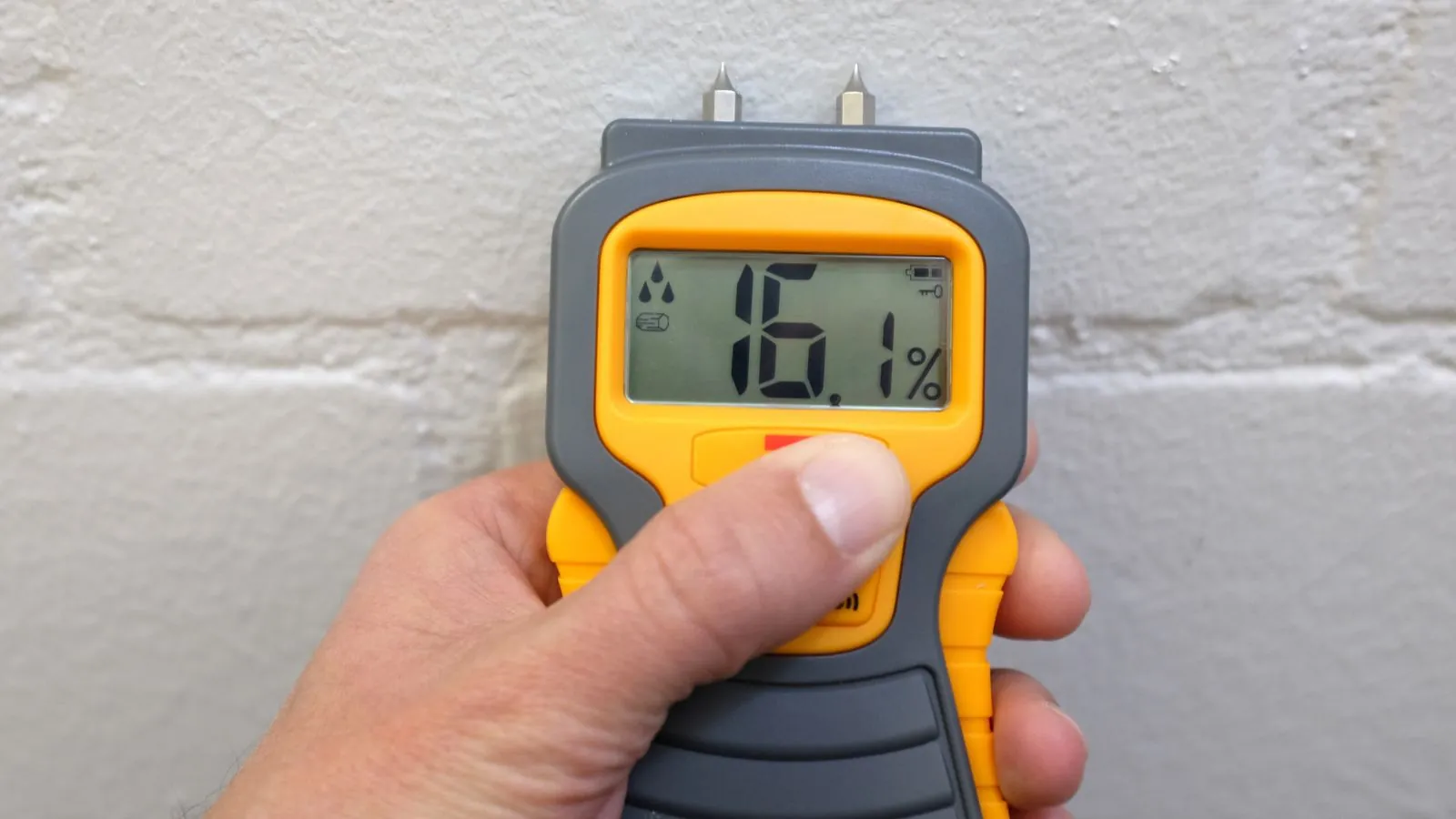
Drying starts with a map. Moisture meters measure the actual moisture content in wood and drywall, and a thermal camera shows cool spots where water is held. The crew marks the boundary of the wet area, takes baseline readings and records them, then returns at each visit to compare.
This matters because water travels. A wet carpet near an exterior wall may have soaked the wall cavity, and a ceiling stain often traces back to a wet joist bay. Without a map, equipment goes in the wrong place and drying takes longer.
The equipment and what each piece does
Drying is physics. Each tool plays a part.
| Equipment | Purpose | Typical placement |
|---|---|---|
| Air movers | Push air across wet surfaces to speed evaporation | Along walls and across floors |
| LGR dehumidifiers | Pull evaporated water out of the air | Central to the wet area, often with ducting |
| Moisture meters | Measure moisture in wood, drywall and concrete | Used at every visit |
| Thermal camera | Shows cool, wet zones behind finishes | Used for mapping and checks |
| Injectidry or panel systems | Dry cavities and hardwood without removal | Where a material is worth saving |
Not sure this is the right page? Call and describe what you see.
☎ (814) 358-8169Need to know if your house is really dry? Call the line.
☎ (814) 358-8169Water mitigation and the drying goal
Water mitigation is the early drying work that limits the damage. The standard the trade uses, ANSI/IICRC S500, calls for a documented drying goal, often set by measuring a dry reference material in the same house. When your wet materials match that reference, they are considered dry.
Drying usually takes a few days, but dense materials like hardwood, plaster and concrete take longer. Cool, damp weather slows evaporation, so the crew may raise the room temperature to help. Equipment can be noisy, and the house will feel warm and dry while it runs.
What dry actually means
A wall that feels dry is not necessarily dry. Drywall can feel fine while the stud behind it is wet. Meters read the inside, which is why daily readings are recorded in the scope.
Closing a wall too early traps moisture and invites mold, so repairs wait for the final readings. For rooms where drywall or carpet was removed, the next steps are covered in wall and drywall water damage repair and carpet water damage restoration.
Drying in Johnstown houses
Johnstown has a lot of older homes, and many have plaster walls, thick framing and basements, all of which dry more slowly than modern drywall. Ask the crew how they plan to deal with plaster and old lumber.
The weather adds to the challenge. A cool, damp spell after a storm can stall drying, as can a house that is shut up in winter. For help with a flooded lower level, see basement water damage cleanup. Homes in Salix and nearby towns often sit higher and cooler, which matters for drying time.
What affects the cost of drying
Price follows the amount of equipment, the size of the wet area, the number of days of drying, the materials involved and how often readings are taken. Scope and price are explained before work starts. Want your real number? Call (814) 358-8169.
Drying is often part of a covered water damage claim, but the answer depends on the cause and your policy. Read your policy or ask your insurer. The moisture log is the record they will want.
Local examples
Homes in Moxham, with finished walls and wood floors, are a good example of why readings matter.
Safety checklist and standards
The drying and water category terms used here come from ANSI/IICRC S500, the industry standard for professional water damage restoration. For claims, the Pennsylvania Insurance Department advises photographing damage before cleanup and keeping receipts.
- Do not use a household vacuum on standing water.
- Treat sewage or flood water as contaminated and wear gloves and boots.
- Leave the home and call 911 or the gas utility if you smell gas.
- Wash hands before eating after any contact with wet materials.
Frequently asked questions
Often three to five days for a typical wet room, longer for dense materials, cool weather or large areas. Readings, not the calendar, decide when drying is done.
For a small clean-water spill, yes. For larger losses, consumer equipment moves too little air and removes too little water, and you will not know whether the structure is dry without meters.
Air movers and dehumidifiers run hard to dry a structure quickly. Noise is a sign the equipment is working, and crews place it to reduce disruption where they can.
Mitigation is the early phase that limits damage by extracting and drying. Restoration includes that phase and the repairs afterward.
Want readings, not guesses? Call the dispatch line any hour.
☎ (814) 358-8169