
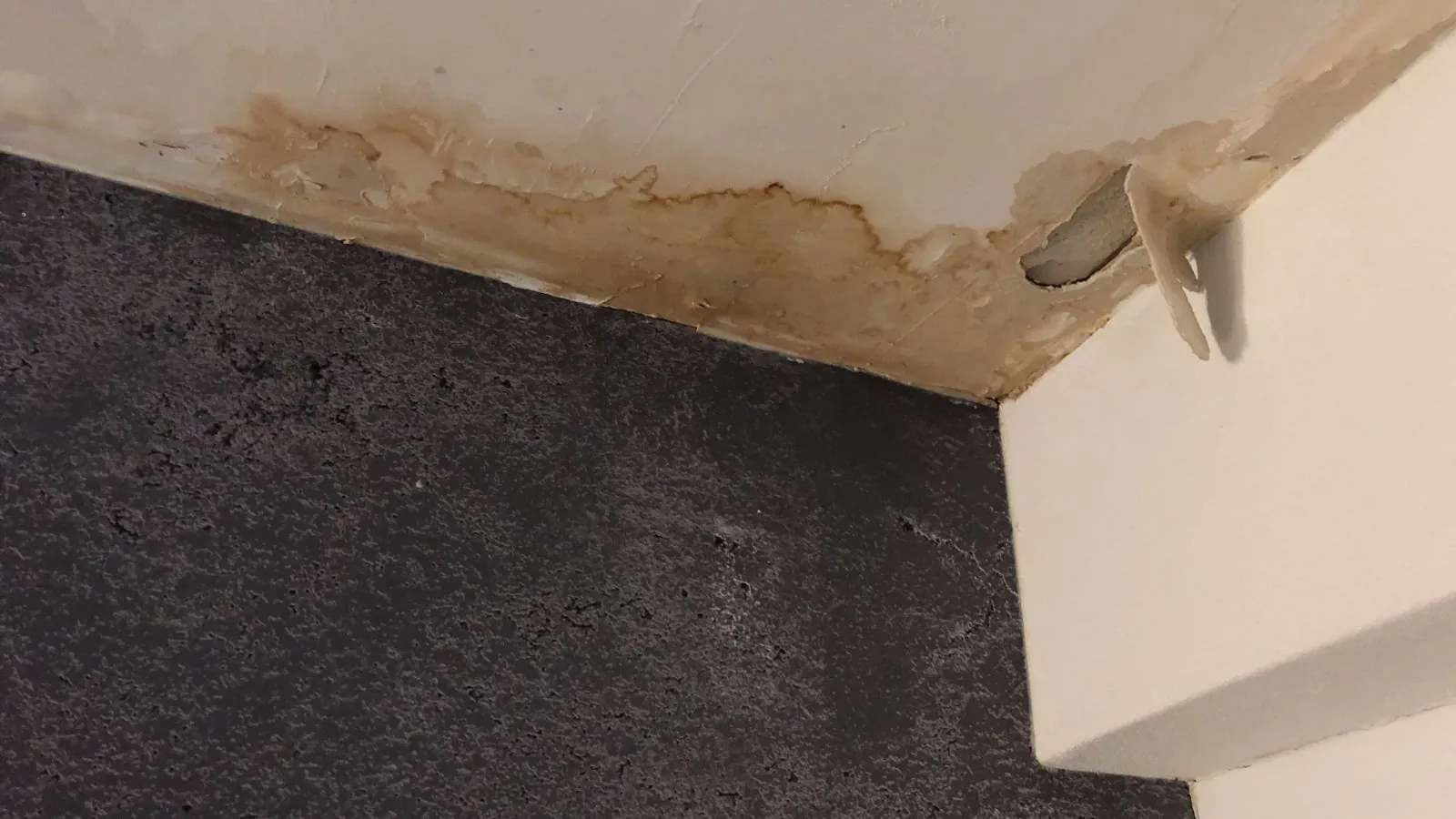
Water is the most expensive thing to miss
A home inspection is essential, but you can learn a lot at a showing if you know what to look for. Water damage is one of the costly surprises in older houses, and Johnstown has plenty of older houses. This checklist helps you spot warning signs and decide whether to dig deeper.
Do not rely on how a house smells or looks on a dry day. Use your eyes, a flashlight and a few questions. And always hire a licensed inspector before you buy.
Room-by-room checklist
Take your time in each place.
| Where | What to check | What it may mean |
|---|---|---|
| Ceilings | Brown rings, sagging, fresh paint patches | Roof or plumbing leak above |
| Basement walls | White crust, dark lines, paint flaking | Moisture coming through the wall |
| Basement floor | Stains near drains and the sump pit | Past flooding or backups |
| Under sinks | Staining, swollen cabinet bases, corroded fittings | Slow leaks |
| Around windows | Soft trim, peeling paint | Water getting in around the window |
| Flooring | Cupping, gaps, soft spots | Past or ongoing moisture |
Dealing with water damage right now? Call the 24/7 line.
☎ (814) 358-8169Use your nose and a flashlight
A musty smell in a basement or closet is a warning that something is damp. A flashlight held at a low angle against a wall shows ripples, bubbles and repairs that are hard to see in flat light. Look closely at the lower few inches of walls, where water wicks up from floors.
Open closet doors on exterior walls and look at the back corners. Check the attic for stained roof sheathing, rusty nail tips and compressed insulation. Each is a sign of past or present moisture.
Questions for the seller
Ask whether the house has ever had water in the basement, a roof leak or a plumbing leak, and what was done about it. Ask for receipts, permits and any restoration paperwork. A seller who has the records handy is usually telling the truth, and one who is vague deserves a closer look.
Ask what the sump pump does and when it last ran. Ask where the main shutoff is. Ask about insurance claims on the property, since an insurance history report may be available through your agent.
When to call an expert
A home inspector will use a moisture meter and may use a thermal camera. If they find readings or stains that worry you, ask for a specialist, such as a plumber, roofer or drainage contractor. A restoration company can also map moisture and tell you the scope of what would be needed, as described in structural drying and dehumidification.
Do not skip a sewer line camera inspection on an older home. Backups are common in older sewer systems, and a camera shows root intrusion and cracks that you cannot see.
Bring a short kit to the showing
A flashlight, a small mirror, a phone with a camera and a pin-style moisture meter are enough to learn a lot in twenty minutes. Press the meter into baseboards, the bottom of door frames and drywall near plumbing walls. Photograph anything odd so you can ask about it later.
Open cabinet doors under every sink and look at the back panel and the floor of the cabinet. Swollen particleboard, rust on pipe fittings and white mineral rings are all signs of old or repeated leaks.
Questions to put to the seller in writing
Ask whether the house has ever had water in the basement, a roof leak, a burst pipe or a sewer backup. Ask what was repaired, who did the work and whether an insurance claim was filed. Written answers are far more useful than a casual reply at the door.
A seller who repaired a problem should be able to show receipts or photos. If the answer is a vague "it was fixed years ago," treat that as a reason to inspect harder, not as reassurance.
When to call in a specialist
A general home inspection is a good start, but it is a visual survey. If you find stains, a musty smell or readings that look high, ask for a moisture assessment by a restoration company or an inspector with a thermal camera. A restoration company can also tell you what drying and repair would involve, which helps when you negotiate price.
Do this before your inspection contingency expires. Once the deadline passes, the repair cost becomes yours.
Buying in Johnstown
Johnstown sits where three rivers meet, and the city has been flooded in 1889, 1936 and 1977. The floodplain history means a flood map check is part of buying here. Look up the address on the FEMA Flood Map Service Center, and ask an insurance agent what a flood policy would cost before you close.
Hillside homes in the city can send runoff toward foundations, so look at the grading and downspouts around the house. In nearby towns like Nanty Glo, where Black Lick Creek winds through the borough, check the creek and levee situation for your address too.
Buyers looking in Sidman should check the township and county for records.
Negotiating with what you find
You have choices. You can ask the seller to repair the problem and provide records, ask for a credit, renegotiate the price or walk away. The right answer depends on how serious the damage is and what the cause is. A leak that has been fixed and dried is very different from one that is still active.
If the problem is a basement that floods, read basement water damage cleanup to understand the causes, since a seepage problem needs drainage work that restoration does not do.
Standards and sources
The drying and water category terms used here come from ANSI/IICRC S500, the industry standard for professional water damage restoration. For claims, the Pennsylvania Insurance Department advises photographing damage before cleanup and keeping receipts.
Frequently asked questions
You can spot many signs with a flashlight and your eyes, but a licensed inspector with a moisture meter is the real check.
Not always, but a freshly painted stain deserves questions. Ask what caused it and what was fixed.
Check the FEMA flood map for the address and ask your lender about flood insurance. A flood policy can add to your monthly cost.
Ask to see it after rain if you can, and look for staining and mineral deposits. A seller disclosure and inspector notes help.
Have water damage right now? The dispatch line is open any hour.
☎ (814) 358-8169