
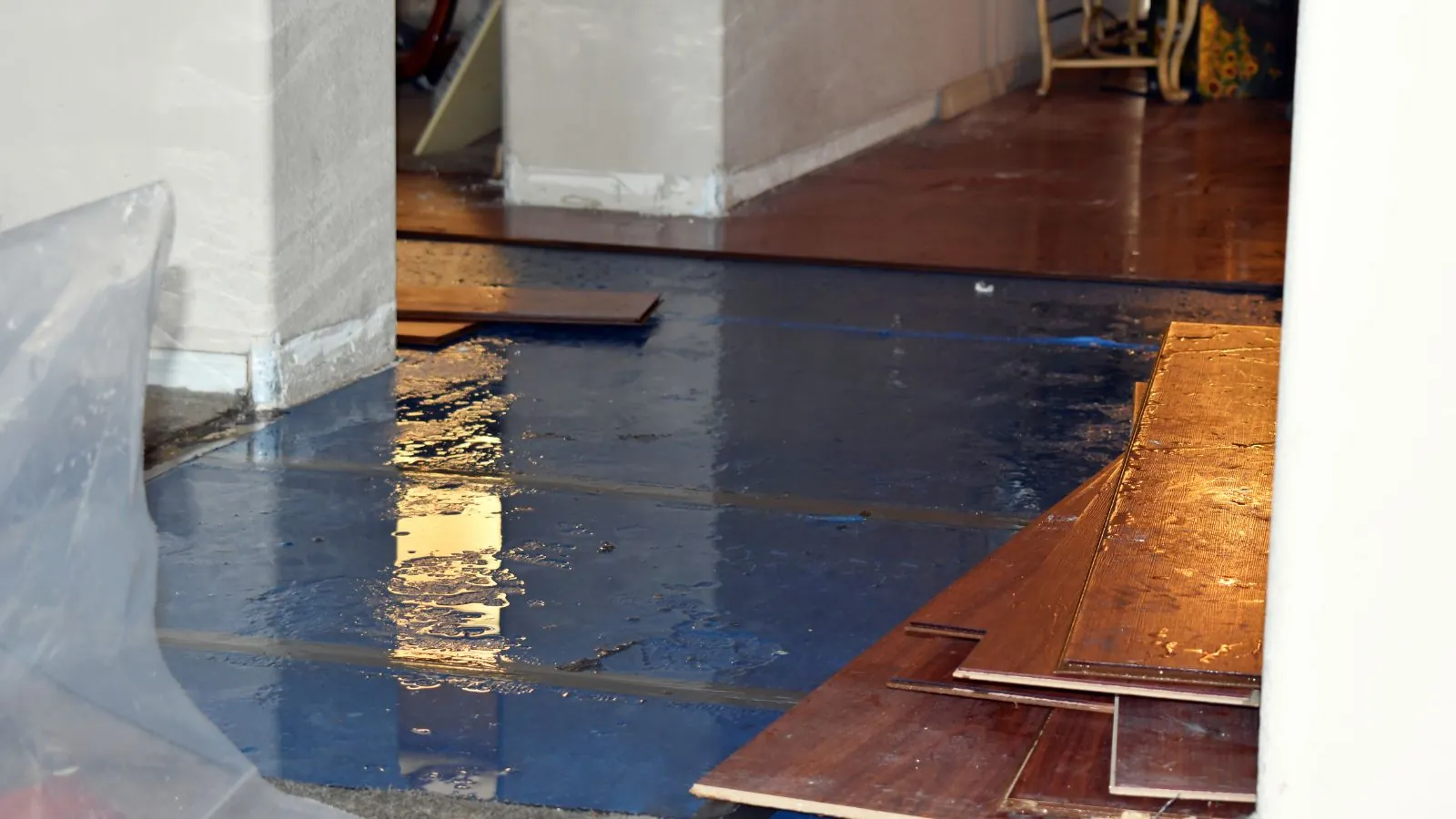
Two people, two policies, one wet floor
Water damage in a rental is confusing because two people are affected. The landlord owns the building and carries a policy on it. The tenant owns the belongings and may carry renters insurance. Neither policy automatically covers the other, so the first steps should protect both.
This guide is general information. Lease terms and local law vary, so check your lease and ask the right office if you are unsure.
First steps for a tenant
Stop the water if you can, usually by closing the shutoff under a sink or at the toilet, and tell the landlord right away. Do it in writing as well, by text or email, so you have a record with a date. Photograph everything before you move it, including the source, the damaged belongings and the walls and floor.
If water is near outlets or the panel, call 911 or the utility. Do not try to dry the unit with hardware-store fans and think you are done. Wet drywall and flooring need proper drying, and that is the landlord's decision to make.
Dealing with water damage right now? Call the 24/7 line.
☎ (814) 358-8169Who usually handles what
Details depend on the lease, but this is a common split.
| Item | Usually the landlord | Usually the tenant |
|---|---|---|
| Repairing the leak and the building | Yes | No |
| Drying walls, floors and ceilings | Yes | No |
| Replacing damaged belongings | No | Yes, via renters insurance |
| Temporary housing | Depends on lease and policy | Depends on renters policy |
| Reporting the leak promptly | Responds | Reports |
What a landlord should do
Move quickly, because the damage grows each day. Stop the source, call a restoration company and tell tenants what is happening. Keep records of the leak, the repair and the drying. If the damage came from one unit and reached others, document each unit separately.
Multi-unit leaks are common. Water from an upstairs apartment can reach ceilings below, as explained in our ceiling water damage repair guide. Coordinating the units in one drying plan is faster than handling them one at a time.
Protecting your belongings and deposit
Move what you can to a dry spot and keep a list of what was damaged, with photos and rough values. If renters insurance applies, notify the insurer promptly. Do not throw anything away until you have photographed it and the insurer or landlord has seen it, unless it is a health hazard like sewage-soaked items.
If the unit is not livable, ask the landlord in writing about your options. Do not stop paying rent without checking your lease and local rules first.
For tenants: protect yourself in writing
Report water damage to your landlord as soon as you see it, in writing, with photos. A text or email creates a record. Keep a copy and note the date. If the landlord does not respond, send a follow up and keep it.
Move your belongings out of the wet area if it is safe. Renters insurance may cover your belongings, so call your insurer and ask. The building policy usually covers the structure.
For landlords: act quickly and keep records
Prompt response limits damage and limits disputes. Stop the source, bring in a drying crew and document everything. Tell the tenant what you are doing and what to expect, and give a realistic timeline.
If a unit becomes unsafe to live in, talk to an attorney about your obligations. This page is general information and not legal advice.
When there is a dispute
Disagreements usually come down to who caused the damage and who should pay. Clear records of dates, photos and messages help both sides. If a dispute cannot be settled, local legal aid or an attorney can explain the options.
This page is general information and not legal advice.
Short term fixes that help both sides
Simple steps such as moving belongings, running a fan and photographing the damage cost little and reduce the later bill. Agree on who calls the plumber, who calls the insurer and who tells the other party. Clear roles prevent delays.
Confirm every agreement by text or email so there is a record.
Rentals in Johnstown
The City of Johnstown lists a Code Enforcement department on its website, and City Hall can be reached at (814) 539-2504 for property concerns. If a landlord does not respond to a water problem, a call to the city is one place to start, though we cannot say what the city will do in your case.
Outside the city, in places such as Salix, the township is the contact. A written message to the landlord, with photos, is useful no matter which office you contact later.
The same written-notice habit applies for tenants in Nanty Glo.
Mold, smell and what not to do yourself
A musty smell after a leak is a sign that something is still wet. Tell the landlord and ask for moisture checks. Tenants should not tear out drywall or carpet on their own, because it can make a claim harder and may violate the lease.
For a leak from a machine, see appliance leak water damage, since washer hoses and dishwasher lines are common sources in rentals.
Standards and sources
The drying and water category terms used here come from ANSI/IICRC S500, the industry standard for professional water damage restoration. For claims, the Pennsylvania Insurance Department advises photographing damage before cleanup and keeping receipts.
Frequently asked questions
It depends on the cause, the lease and the policies. The landlord usually repairs the building, and renters insurance usually responds for the tenant's belongings.
Do not assume you can. Rules vary, so check your lease and get local advice before you hold back rent.
Notify the landlord first. In an emergency, you can call the line to stop the water, but drying and repair are normally arranged by the landlord.
Photos, receipts, serial numbers and a written list. Take pictures before anything is moved or thrown out.
Have water damage right now? The dispatch line is open any hour.
☎ (814) 358-8169